Key Takeaways
1. Real-Time Load Monitoring: Onboard weighing enables garbage truck operators to track payload weight in real time, preventing overloading violations and optimizing route efficiency.
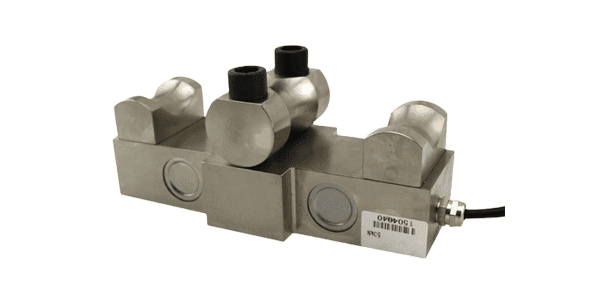
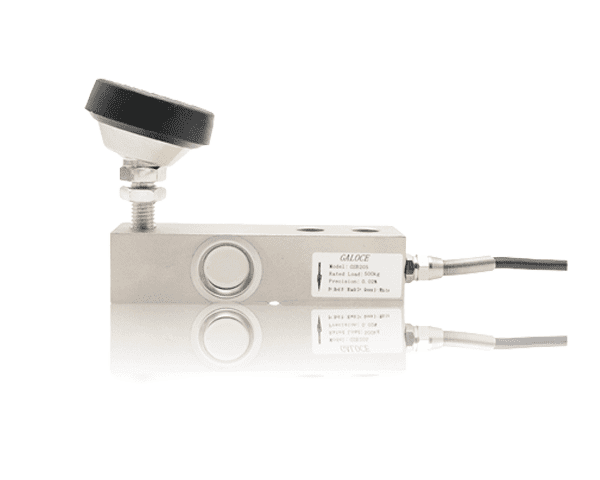
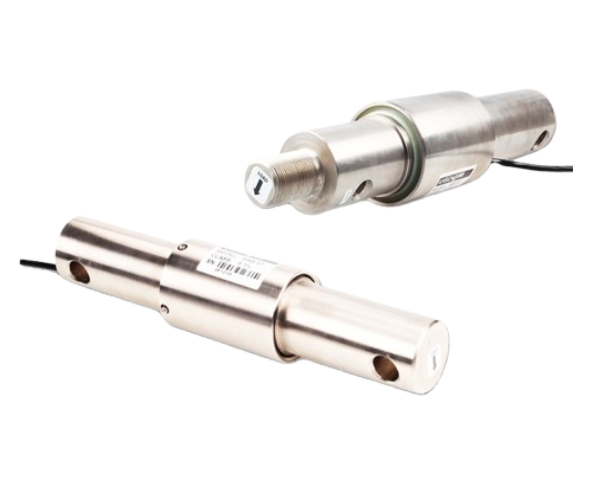
2. Bridge-Type Load Cells: GBS801B (15t) and GBS802B (2/5/10t) bridge-type load cells are specifically engineered for truck-scale applications, delivering 1%F.S accuracy with robust 120% safe overload capacity.
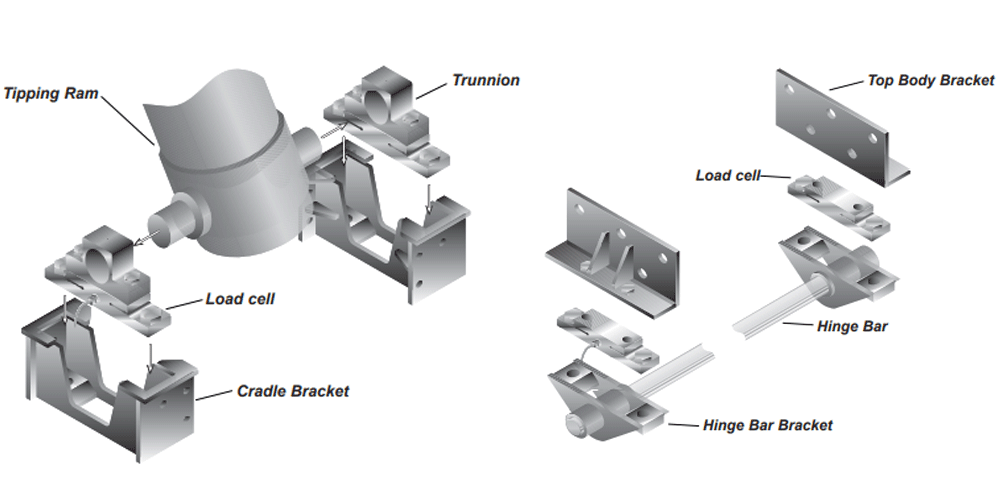
3. Dual Installation Methods: Sensors mount on either the axle or the frame, providing flexibility for different garbage truck configurations without major structural modifications.
4. Cost Control & Compliance: Accurate per-trip weight data supports billing transparency, fuel cost allocation, and regulatory compliance with vehicle weight limits.
With the rapid development of economy and technology, the urbanization process is advancing rapidly, and people's quality of life is improving day by day. At the same time, the amount of garbage generated is also increasing day by day. Garbage trucks have become an essential tool for maintaining environmental sanitation in cities. In the process of garbage cleaning, if the weight of garbage cleaned by each truck is not known, the cost of the cleaning process cannot be controlled. At this time, the garbage truck onboard weighing system plays a critical role — by using this system, weighing work can be made simpler, transportation management more efficient, and safety more controllable.
Challenges in Garbage Truck Weighing
Municipal sanitation operations face several unique challenges that make accurate onboard weighing essential rather than optional:
|
Challenge
|
Impact on Operations
|
Weighing Solution
|
|
Overloading Risk
|
Fines, axle damage, tire wear, brake failure, safety hazards
|
Real-time weight display alerts driver before overload occurs
|
|
Cost Allocation
|
Cannot bill by weight; flat-rate pricing causes revenue leakage
|
Per-trip weight records enable accurate per-ton billing
|
|
Route Optimization
|
Trucks return half-empty or overloaded; fuel wasted
|
Weight data guides route planning and truck dispatch
|
|
Harsh Environment
|
Vibration, moisture, corrosive substances, temperature swings
|
Bridge-type load cells with rugged construction withstand field conditions
|
|
Regulatory Compliance
|
Weight limit enforcement; untraceable loads
|
Digital weight logs provide auditable compliance records
|
System Architecture
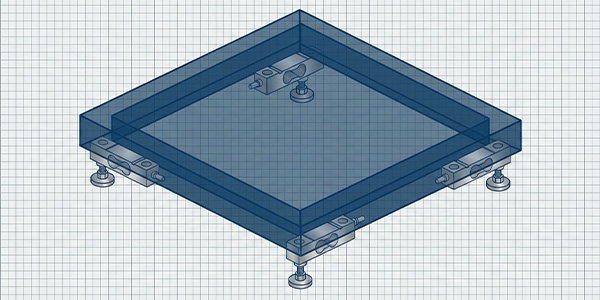
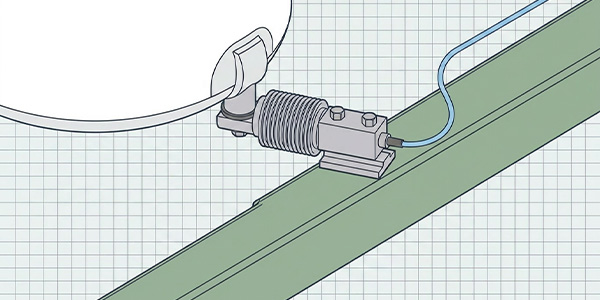
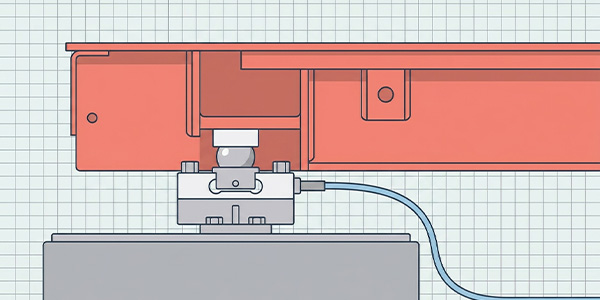
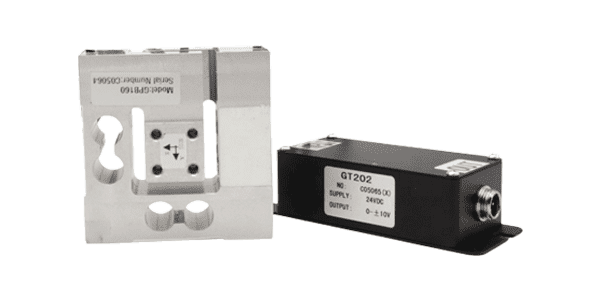
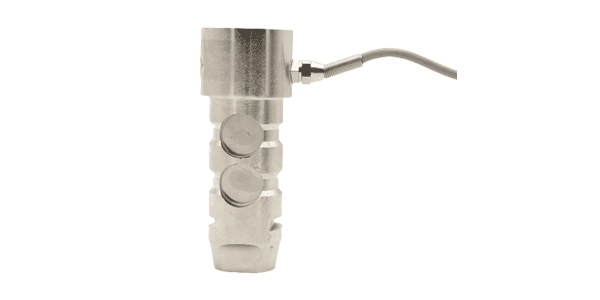
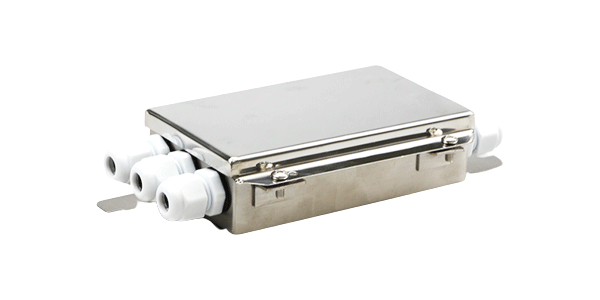
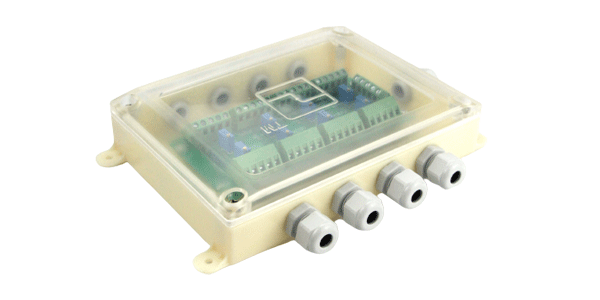
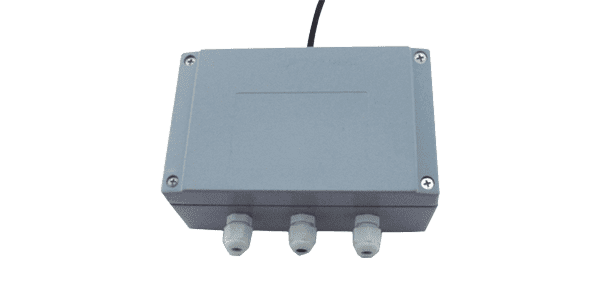
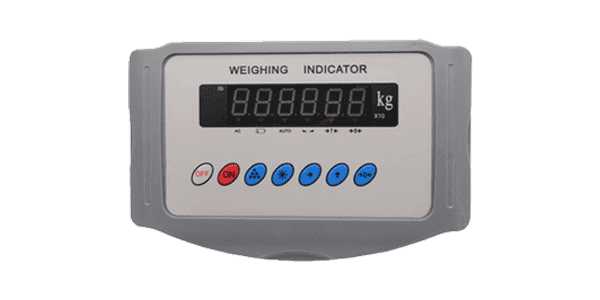
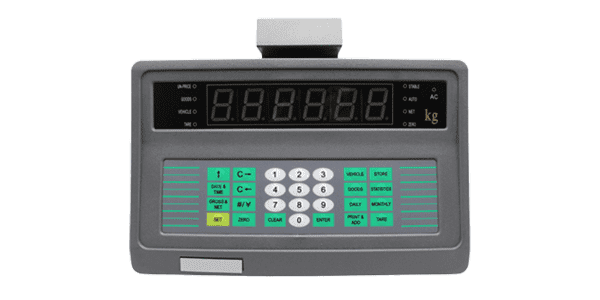
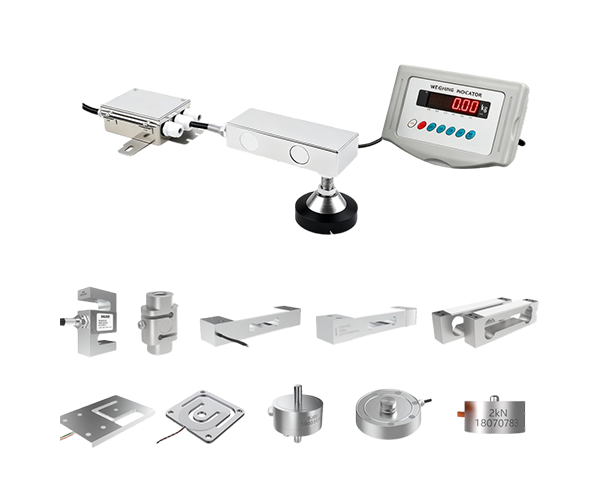
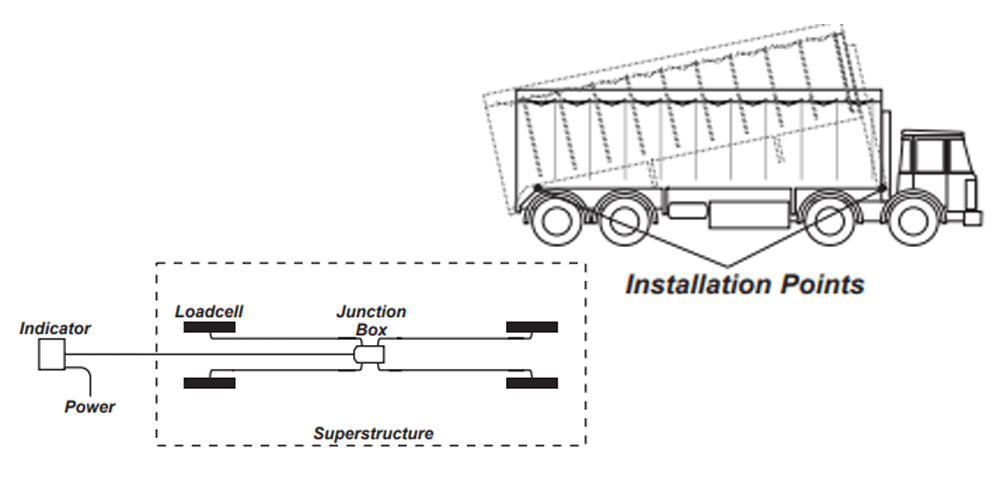
The garbage truck onboard weighing system mainly includes load cells, a junction box, and a weight indicator. The load cell is mounted on the axle or frame (two installation methods), and the instrument is installed in the cab for real-time monitoring.
The signal flow follows a clear chain from force detection to driver display:
|
Stage
|
Component
|
Function
|
|
1. Sensing
|
Bridge-type load cell (GBS801B/GBS802B)
|
Converts mechanical force from axle/frame load into mV/V signal via strain gauge Wheatstone bridge
|
|
2. Signal Conditioning
|
Junction box (summing box)
|
Combines multiple sensor signals, provides excitation voltage, and balances parallel bridge outputs
|
|
3. Processing
|
Weight indicator (in-cab display)
|
Amplifies, digitizes, and calculates total weight; displays real-time payload
|
|
4. Output
|
Display / Printer / Data port
|
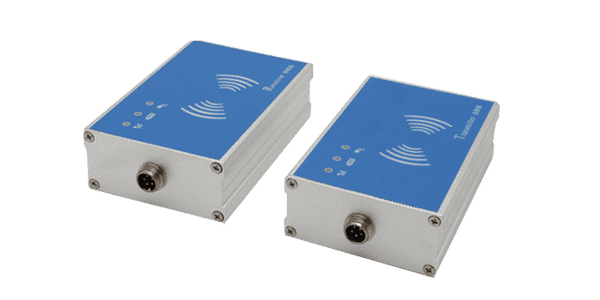
Shows weight on screen, prints trip tickets, transmits data to fleet management system via RS232/RS485
|
|
5. Power
|
Truck battery (12V/24V DC)
|
Powers the entire system; load cells operate at 5~12VDC excitation
|
Why Bridge-Type Load Cells?
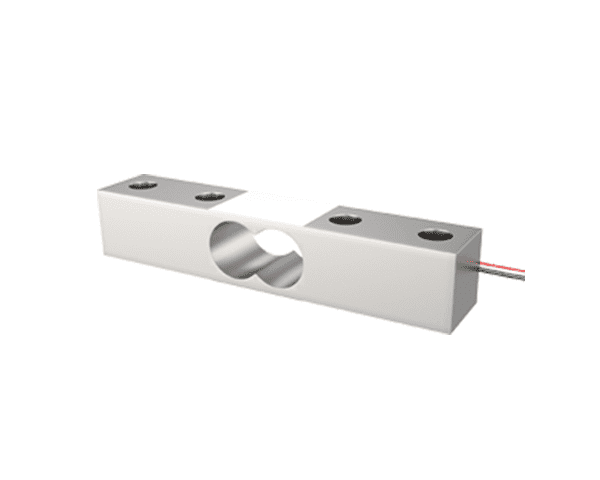
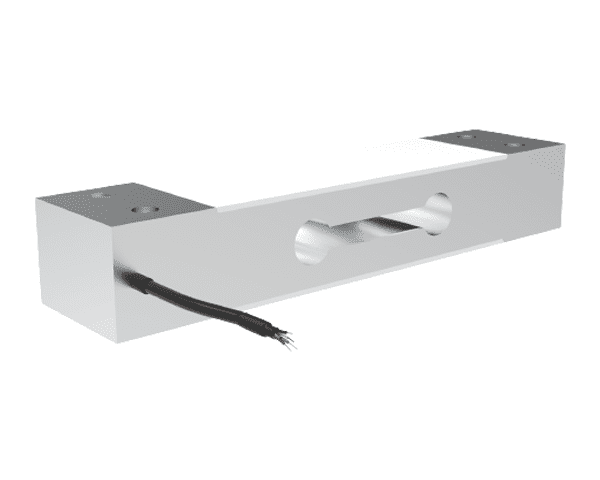
Bridge-type (also called truck-scale or shear-bridge) load cells are the industry standard for heavy-vehicle weighing. Their design offers distinct advantages for garbage truck applications:
|
Feature
|
Bridge-Type Advantage
|
Benefit for Garbage Trucks
|
|
High Capacity
|
Rated up to 15t per cell
|
Handles full garbage load without sensor saturation
|
|
Low Profile
|
Compact height fits within axle/frame mounting space
|
No need to modify truck chassis or raise body height
|
|
Anti-Side Force
|
Shear-bridge structure resists lateral and torsional forces
|
Maintains accuracy during turning, braking, and uneven road surfaces
|
|
Overload Tolerance
|
120% safe overload; 150% ultimate overload
|
Survives shock loads from garbage compaction and dumping operations
|
|
Sealed Construction
|
IP68-rated housing with potched strain gauge cavity
|
Withstands rain, wash-down, corrosive leachate, and dust
|
|
Wide Temp Range
|
Operating from -30°C to +70°C
|
Reliable in winter collection routes and summer heat alike
|
Recommended Load Cell Models
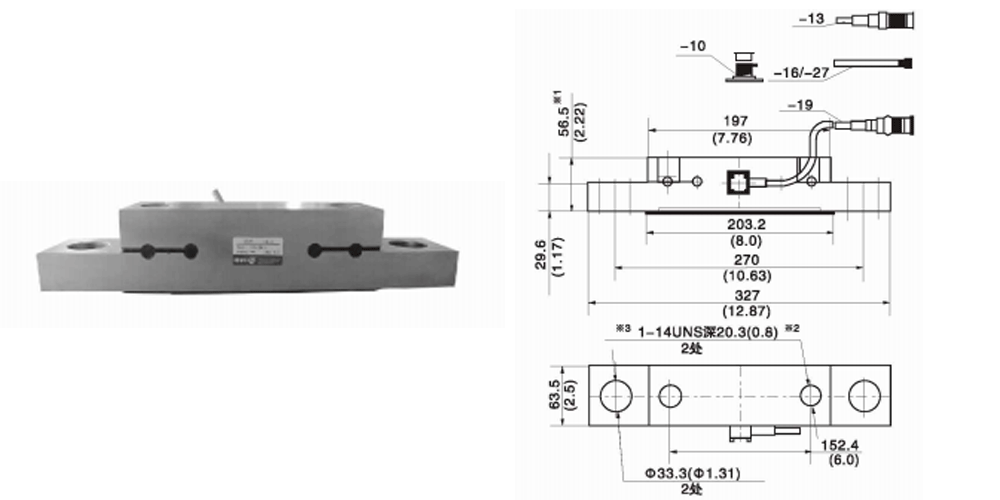
GALOCE recommends two bridge-type load cell models depending on truck capacity and installation position:
GBS801B — Heavy-Duty Bridge Load Cell (15t)
|
Parameter
|
Value
|
|
Model
|
GBS801B
|
|
Weight Range
|
15t
|
|
Comprehensive Accuracy
|
1%F.S
|
|
Sensitivity
|
1.2mV/V
|
|
Zero Output
|
±2%F.S
|
|
Input Resistance
|
387±25Ω
|
|
Output Resistance
|
350±3.5Ω
|
|
Safe Overload
|
120%
|
|
Ultimate Overload
|
150%
|
|
Supply Voltage
|
5~12VDC
|
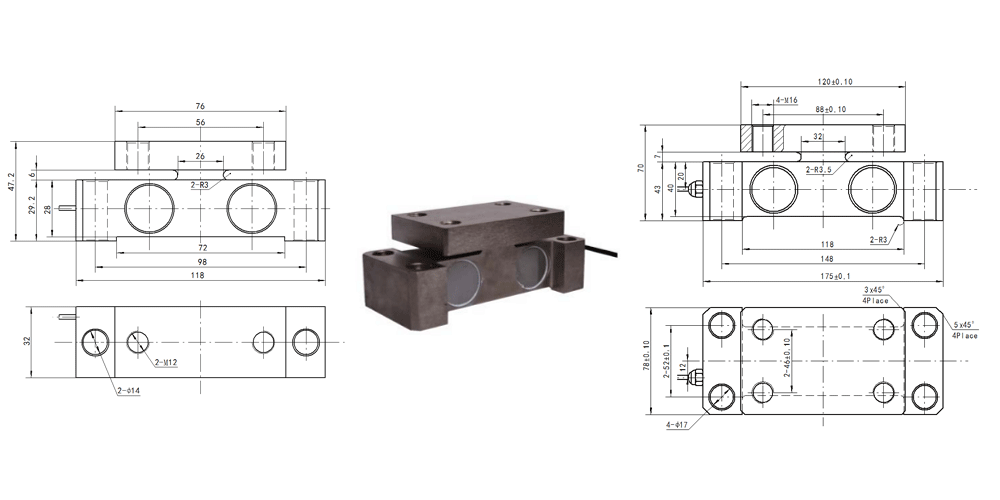
GBS802B — Medium-Capacity Bridge Load Cell (2/5/10t)
|
Parameter
|
Value
|
|
Model
|
GBS802B
|
|
Weight Range
|
2t / 5t / 10t
|
|
Comprehensive Accuracy
|
1%F.S
|
|
Sensitivity
|
1.5~2.0mV/V
|
|
Zero Output
|
±2%F.S
|
|
Input Resistance
|
770±30Ω
|
|
Output Resistance
|
700±7Ω
|
|
Safe Overload
|
120%
|
|
Ultimate Overload
|
150%
|
|
Supply Voltage
|
5~12VDC
|
Model Comparison
|
Parameter
|
GBS801B
|
GBS802B
|
|
Capacity
|
15t
|
2t / 5t / 10t
|
|
Sensitivity
|
1.2mV/V
|
1.5~2.0mV/V
|
|
Input Resistance
|
387±25Ω
|
770±30Ω
|
|
Output Resistance
|
350±3.5Ω
|
700±7Ω
|
|
Accuracy
|
1%F.S
|
1%F.S
|
|
Best For
|
Large rear-loader trucks, heavy-duty routes
|
Medium trucks, side-loaders, light commercial routes
|
Installation Methods
Two primary mounting approaches are used depending on truck type and retrofit requirements:
|
Method
|
Mounting Location
|
Pros
|
Cons
|
|
Axle-Mounted
|
Between axle and leaf spring / suspension
|
Direct load path; high accuracy; measures actual axle load
|
Requires axle access; more labor-intensive installation
|
|
Frame-Mounted
|
Between truck frame and body/container mounting points
|
Easier access; measures payload directly; faster retrofit
|
May require custom mounting brackets; slightly lower precision
|
Step-by-Step Installation Guide
-
Inspect mounting surface: Ensure the axle or frame contact area is flat, clean, and free of rust or paint buildup. Irregular surfaces cause uneven stress distribution.
-
Position the load cell: Place the bridge-type sensor between the load-bearing surfaces. Verify the loading direction arrow points downward (compression axis aligned with gravity).
-
Install mounting hardware: Use Grade 10.9 or higher bolts. Torque to manufacturer-specified values. Apply thread-lock adhesive to prevent loosening from vibration.
-
Route cables: Run sensor cables along the frame rail using protective conduits. Avoid sharp bends and heat sources (exhaust, engine). Secure every 30cm with cable clamps.
-
Connect junction box: Terminate each sensor's 4-wire cable to the summing box terminal block. Ensure color coding matches the wiring diagram (see below).
-
Calibrate: Apply known reference weights (or use the truck's rated load with calibrated test weights). Adjust span and zero on the indicator until displayed weight matches reference within 1%F.S.
4-Wire Bridge Wiring Color Code
|
Wire Color
|
Function
|
Terminal
|
|
Red
|
Excitation + (E+)
|
V+ input
|
|
Black
|
Excitation − (E−)
|
V− / GND
|
|
Green
|
Signal + (S+)
|
mV+ output
|
|
White
|
Signal − (S−)
|
mV− output
|
Key Benefits
|
Benefit
|
Description
|
Operational Value
|
|
Overload Prevention
|
Real-time weight display with audible/visual alarm at preset threshold
|
Avoids fines (up to $10,000+ per violation), prevents axle/tire damage
|
|
Accurate Billing
|
Per-trip weight tickets with timestamp and truck ID
|
Enables pay-by-weight contracts; eliminates disputes with disposal sites
|
|
Route Optimization
|
Weight data integrated into fleet management software
|
Reduces fuel consumption 8–15% by matching truck capacity to route demand
|
|
Safety Enhancement
|
Continuous load monitoring during compaction and dumping
|
Prevents tip-over risk from unbalanced loads; protects driver and public
|
|
Data-Driven Decisions
|
Historical weight logs exportable via RS232/RS485 or wireless
|
Supports trend analysis, fleet utilization reporting, and contract verification
|
|
Minimal Downtime
|
Rugged bridge-type cells rated for 1 million+ load cycles
|
Low maintenance; typical MTBF exceeds 5 years in daily sanitation service
|
Application Scenarios
|
Application
|
Typical Payload
|
Recommended Model
|
|
Rear-Loader Garbage Truck
|
8–15t per trip
|
GBS801B (15t)
|
|
Side-Loader Collection Truck
|
5–10t per trip
|
GBS802B (10t)
|
|
Front-Loader Container Truck
|
10–15t per trip
|
GBS801B (15t)
|
|
Mini Collection Vehicle
|
2–5t per trip
|
GBS802B (2t/5t)
|
|
Recycling Transport Truck
|
5–10t per trip
|
GBS802B (10t)
|
|
Construction Waste Truck
|
10–15t per trip
|
GBS801B (15t)
|
Frequently Asked Questions
Q1: Can the weighing system work while the truck is moving?
Yes. The GBS801B/GBS802B load cells measure static force on the axle or frame. While the truck is in motion, the indicator displays dynamic weight with ±3-5% variance due to road-induced force fluctuations. For maximum accuracy, readings should be taken when the truck is stationary on level ground. The indicator can be configured to auto-freeze the display when motion stops.
Q2: How many load cells are needed per truck?
Typically 2 to 4 load cells are used per truck, depending on the number of axles and mounting method. A single-axle rear-loader usually uses 2 sensors (one per wheel side). A tandem-axle truck may use 4 sensors. All sensors connect to a single junction box that sums their outputs for total weight.
Q3: What is the difference between GBS801B and GBS802B?
GBS801B is a single-capacity (15t) heavy-duty model with 1.2mV/V sensitivity and lower input resistance (387Ω), designed for large rear-loader and front-loader trucks. GBS802B offers multiple capacity options (2t/5t/10t) with higher sensitivity (1.5~2.0mV/V) and higher input resistance (770Ω), suited for medium and light collection vehicles. Both share the same 1%F.S accuracy and 120%/150% overload ratings.
Q4: How often should the system be recalibrated?
We recommend calibration every 6 months for daily-use trucks, or whenever sensor mounting hardware is serviced. Calibration should also be performed after any collision, chassis repair, or suspension replacement. Use certified test weights traceable to national standards for best results.
Q5: Can the system integrate with GPS fleet management?
Yes. The weight indicator supports RS232 and RS485 output, which can connect to a GPS tracker or telematics unit. Weight data is transmitted alongside GPS coordinates and timestamps to the fleet management platform, enabling real-time monitoring of each truck's payload status, route progress, and collection volume.
Get a Free Consultation
Need a customized garbage truck onboard weighing solution? Our engineers will help you select the right GBS801B or GBS802B configuration, design the mounting layout, and provide full installation support. Contact us today for a free technical consultation.
Get a Free Consultation →
Related Topics